Ganga Girls – The River’s Daughters
From Lake Superior’s primordial shores, from the mighty Mississippi and Missouri,tribal women in rivers of the North American heartland prayed to Mother Aki and mermaid-like Nibhana Spirits.
For much of the past century, the River Ganga has carried more than water.




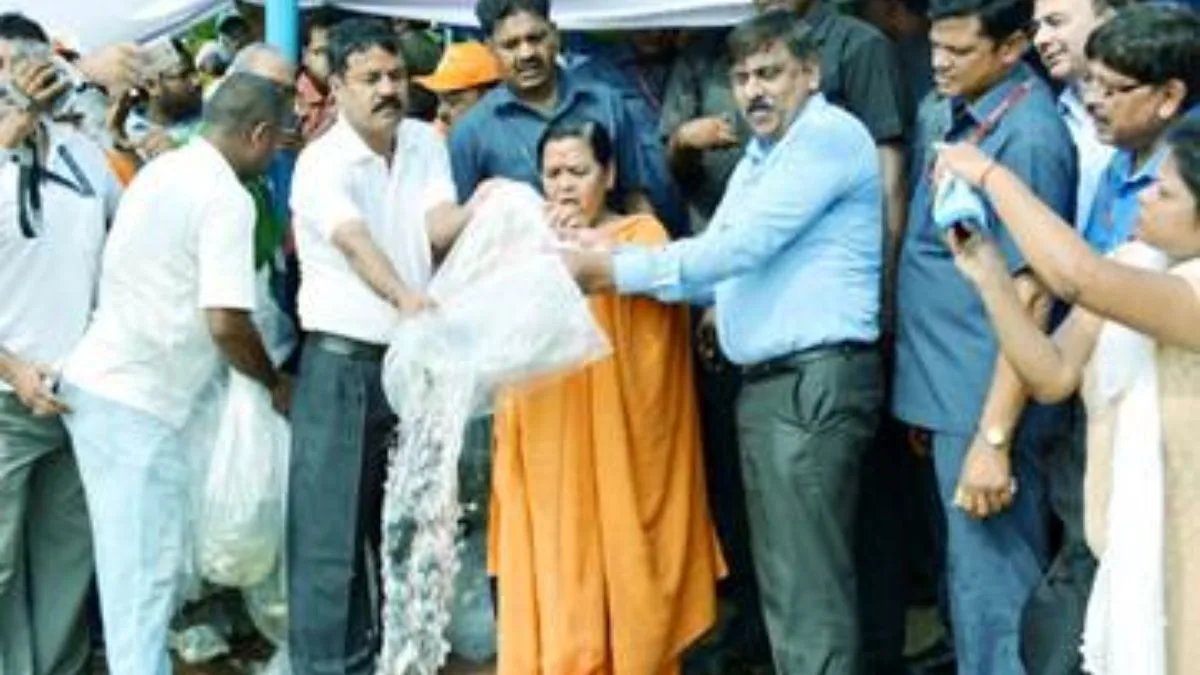
Photo: PIB
A total of 205.5 lakh indigenous fish seeds were released through 169 river ranching programmes between 2017 and 2025, the government said on Wednesday.
For much of the past century, the River Ganga has carried more than water. It has sustained livelihoods, fed communities, and anchored a dense web of biodiversity along its course. In recent decades, however, the river’s native fish have thinned — casualties of habitat degradation, altered flow regimes, pollution and relentless, often unregulated fishing pressure.
Advertisement
Over the last 10 years, a quieter effort has been underway to reverse that decline. Under the Government of India’s Namami Gange Programme, the ICAR–Central Inland Fisheries Research Institute (ICAR-CIFRI) has carried out a large-scale scientific river ranching programme — an intervention designed not merely to restock the river, but to restore its ecological balance.
Advertisement
“Between 2017 and 2025, ICAR-CIFRI organised 169 river ranching programmes across ecologically critical stretches of the Ganga and its tributaries. In that period, 205.5 lakh seeds of indigenous fish species were released into selected river segments. The emphasis has remained firmly on native species conservation, preservation of genetic integrity, and the long-term sustainability of riverine fisheries,” the government said.
Impact of Ranching programmes: The programme has covered a wide range of indigenous species, including: Indian Major Carps (IMCs), Mahseer, Native catfishes, Chitala and Freshwater scampi.
In a landmark first, the ICAR–Central Inland Fisheries Research Institute (ICAR-CIFRI) estimated annual fish catches in major rivers, including 15,134 tonnes in the Mahanadi and 18,902 tonnes in the Krishna.
Scientific river ranching under the Namami Gange Programme demonstrates that depleted native fish stocks can be replenished without compromising genetic integrity or ecological balance. The task now is continuity — scaling such initiatives, sustaining research, deepening stakeholder participation and refining adaptive management. The future of the river Ganga’s biodiversity and fisheries potential will depend not on a single season of stocking, but on sustained stewardship grounded in science.
Advertisement